

This is a summary of the presentation about Gaelic Languages by our partners Carolina, Christie, Lara and Lucía.
Gaelic languages are part of the Celtic languages. They come from the Indo-European languages as well as Brittonic languages (Welsh and Breton).
Linguistic classification:
·
Indo-European
o
Celtic
§ Gaelic
·
Irish
·
Scottish
Gaelic
·
Manx
Scottish Gaelic

• Spoken in Scotland, Us/ Alba.
• 87,100 people have Gaelic language skills.
·
61%
of them are in Eilean Siar.
·
7%
Highlands.
·
6%
Argyll and Bute.
·
26%
Other (Edinburg, Glasgow, etc.).
Scotish Gaelic Alphabet.
A: ailm
(elm) |
B: beith
(white birch) |
C: coll
(hazel) |
D: dair
(oak) |
E: eadha
(aspen) |
F: feàrn
(alder) |
G: gort
(ivy) |
H: uath
(hawthorn) |
I: iogh
(yew) |
L: luis
(rowan) |
M: muin
(vine) |
N: nuin
(ash) |
O: onn (furze) /
oir (spindle) |
P: peith
(downy birch) |
R: ruis
(elder) |
S: suil
(willow) |
T: teine
(furze) |
U: ura
(heather) |
Irish Gaelic
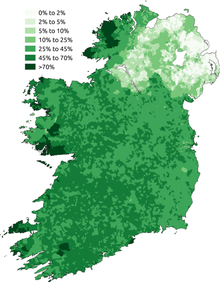
• Spoken in Ireland, Leinster, the Pale, Muster, Connacht and Ulster.
• Was the predominant language of the Irish people for centuries and nowadays is the first official language in Ireland.
• It has between 40,000 and 80,000 speakers.
• Irish Gaelic had his own alphabet but currently it uses the Latin script.
Irish Gaelic Alphabet

Manx
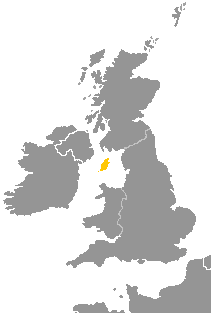
• Spoken in the Island of Man.
• Written in Latin script since 1610.
• It has very few speakers. It is actually a death language that is being revitalised. It was well recorded by the native speakers.
• The last surviving native speaker of Manx died in 1972.
Manx Alphabet

Comparison between Scottish, Irish and Manx Gaelic.
Scottish and Irish Gaelic are closely related. Gaelic speakers can understand each other (like Spanish, Italian and Portuguese speakers).
Differences
|
Scottish Gaelic
|
Irish Gaelic
|
Manx Gaelic
|
Letters in the alphabet
|
18
|
18
|
24
|
Accents
|
Grave (à)
|
Acute (á)
|
None
|
